
The Real Reason It Keeps Coming Back
You patched the crack. You painted on the waterproof coating. You even ran a dehumidifier all summer. And the water came back anyway. If that sounds familiar, you’re not alone — basement water is one of the most common problems we see in Michigan homes, and the reason it keeps returning usually has nothing to do with what’s happening inside the basement.
Let’s walk through what’s actually going on and why In many Michigan homes, the most effective first steps start outside.
Quick Checklist — What to Look For
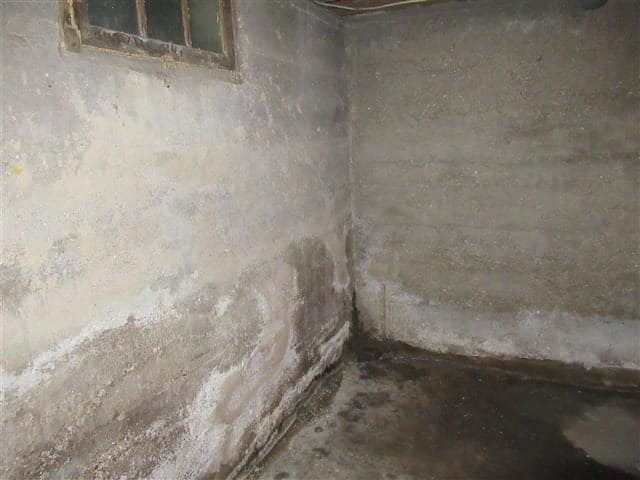
- White, chalky mineral deposits (efflorescence) on basement walls — a sign water has been moving through the concrete
- Damp or wet spots at the base of foundation walls, especially after rain or snowmelt
- Musty smell in the basement that doesn’t go away with normal cleaning
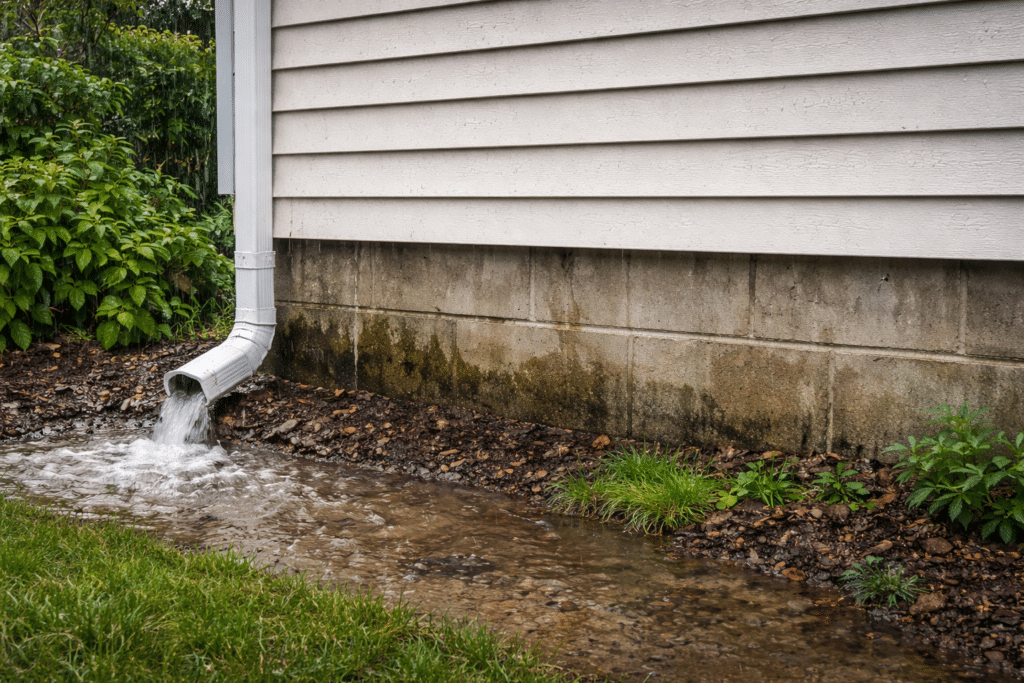
- Gutters that are missing, clogged, or dumping water right next to the foundation
What This Issue Is
Basement water intrusion happens when water from the soil outside pushes through the foundation wall or floor and enters the basement. In most cases, the water isn’t coming through a single crack — it’s being driven by hydrostatic pressure, which is the force that builds up when saturated soil presses against the foundation. That pressure can push water through pores in concrete, along the joint where the wall meets the floor, and through any cracks that have developed over time.
Other common entry points include window wells, slab cracks, utility penetrations, and failed/blocked footing drains—so we look at both surface drainage and the foundation system as a whole.
Why We See It in Michigan Homes
Michigan’s soil and climate create a near-perfect setup for basement water problems. Many areas have clay-rich soil that drains slowly that doesn’t drain well. When it rains or when snow melts, that clay holds water right against the foundation instead of letting it percolate away. The longer it sits, the more pressure builds.
Grading is the other major factor, and it’s one of the most common issues we flag during inspections. Over time, the soil around a foundation settles. Mulch beds get built up. Landscaping changes redirect water flow. What started as proper grading — soil sloping away from the house — gradually becomes flat or even slopes toward the foundation. Once that happens, every rainstorm sends water directly to the base of the wall.
Downspouts are the third piece. We regularly see downspouts that either discharge right at the foundation or are connected to underground drains that are clogged or collapsed. A single downspout on a 1,500-square-foot roof can dump over 900 gallons of water during a one-inch rainstorm. If that water lands within two feet of the foundation, it’s going to find its way in.
Interior fixes like waterproof paint and crack filler can slow things down temporarily, but they’re treating the symptom. The water pressure is still there. And in most cases, it’ll find another path through eventually.
| Inspector Insight: When we see a basement with fresh waterproof paint over the walls and a brand-new dehumidifier running, our first move is always to walk outside and look at the grading and downspouts. In our experience, the first answers are usually outside, the real issue is out there — not inside. Correcting the grading and extending the downspouts is usually the most cost-effective fix, and it’s something most homeowners can do themselves over a weekend. |
Common Signs Homeowners Notice
- A recurring damp spot or water line at the base of a wall that appears after heavy rain and dries out a few days later
- Carpet or stored items near basement walls that develop a mildew smell or visible mold
- Efflorescence — a white, powdery or crystalline deposit on concrete walls — that keeps reappearing even after cleaning
When It’s More of a Concern
- Water is actively pooling on the basement floor or flowing along the wall-floor joint during rain events
- Foundation walls show horizontal cracking (especially in block foundations), which can indicate soil pressure is affecting structural integrity
- Mold growth is visible on walls, floor joists, or stored belongings — this is both a moisture problem and a health concern
When It May Be Less Concerning
- Minor dampness appears only during the spring thaw and doesn’t return during the rest of the year
- Efflorescence is present but there’s no active moisture or standing water — it may indicate past moisture that’s since been corrected
- A small, hairline crack in a poured concrete wall with no signs of water movement through it
What We Typically Evaluate During an Inspection
- Exterior grading around the entire foundation — looking for flat spots, negative slope, or soil that’s settled against the wall
- Gutter condition and downspout discharge points — checking that water is directed at least 6 feet from the foundation (farther when practical) to a proper discharge area
- Foundation walls for cracks, efflorescence, staining, and active moisture
- The wall-floor joint (cove joint) for signs of water entry
- Sump pump operation, including float switch, discharge line, and check valve
- Interior signs of past or present moisture: staining, mold, damaged finishes, or musty odors
This is something we evaluate carefully during inspections across Michigan. If you have questions about basement moisture, foundation drainage, or water intrusion, our team at JW Inspection Services is here to help.