
JW INSIGHT
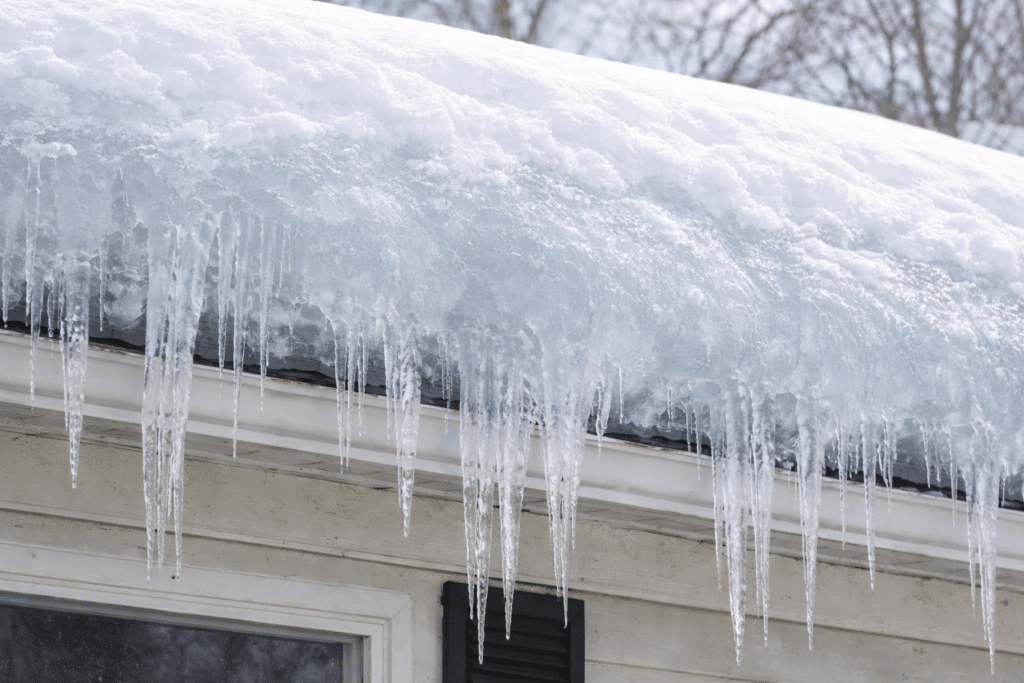
If you’ve lived through a West Michigan winter, you’ve probably seen those thick ridges of ice hanging off the edge of a roof. They might look like a normal part of winter, but ice dams are one of the most common — and most damaging — roof problems we see during inspections across Lower Michigan.
Here’s what’s actually happening up there and what you should be watching for before water starts showing up inside your home.
Quick Checklist — What to Look For
- Thick ice buildup along the lower edge of the roof, especially on the north-facing side
- Icicles forming at the gutters or drip edge — a sign that meltwater is refreezing
- Water stains or wet spots on ceilings or walls near exterior walls upstairs
- Sagging or detached gutters from the weight of built-up ice
What This Issue Is
An ice dam is a ridge of ice that forms along the edge of a roof and prevents melted snow from draining off. When heat escapes from the living space below into the attic — through air leakage and insufficient insulation — it warms the upper portion of the roof enough to melt the snow sitting on top. That water runs down to the colder eaves — the part of the roof that overhangs the exterior wall — and refreezes into a dam. Over time, water pools behind that dam and can work its way under shingles and into your home.
Why We See It in Michigan Homes
West Michigan gets hit especially hard by ice dams because of our combination of heavy lake-effect snow, wide temperature swings, and the age of much of our housing stock. Many homes in the Grand Rapids, Holland, and Muskegon areas were built between the 1950s and 1980s, and still have original — or nearly original — attic insulation and ventilation.
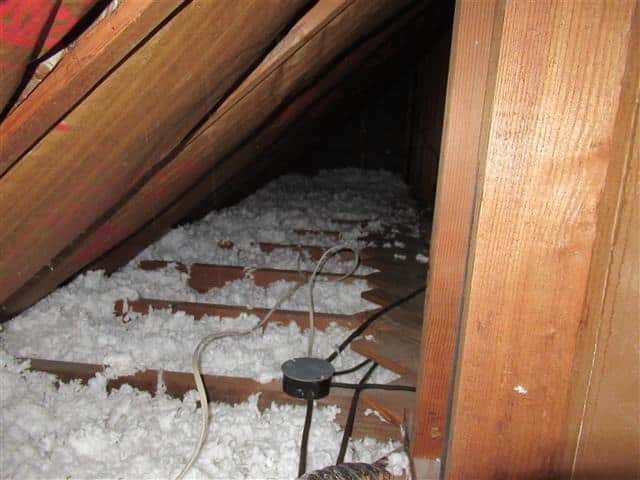
The problem often starts with insufficient or uneven attic insulation. When insulation is thin, compressed, or poorly distributed, heat from the living space rises into the attic faster than it should. That heat warms the roof deck, melts snow from underneath, and starts the freeze-thaw cycle that creates dams.
Ventilation is the other half of the equation. A properly ventilated attic allows cold outside air to enter through the soffits and exit through the ridge, keeping the roof deck uniformly cold. When those soffit vents are blocked by insulation, or when there’s no ridge vent at all, heat gets trapped and the roof warms unevenly.
We also see ice dams form more often on complex roof lines — homes with dormers, valleys, or multiple roof levels. Those transitions create spots where snow accumulates and airflow gets disrupted.
Air Sealing Matters Too
Insulation alone isn’t the whole story. In many Michigan homes, warm air leaks into the attic through small gaps around recessed lights, attic access hatches, plumbing vents, wiring penetrations, and the top plates of interior walls. That moving air carries far more heat than insulation alone would allow. Even a well-insulated attic can develop ice dams if air sealing hasn’t been addressed. Before adding more insulation, sealing those air leaks is often one of the most effective long-term improvements.
| Inspector Insight:We see this a lot in Cape Cod–style homes across West Michigan. The knee walls and sloped ceilings make it really tough to get consistent insulation and airflow in the attic space. If you own a Cape Cod built before 1990, it’s worth having the attic insulation checked — In our experience, these homes frequently have gaps and thin spots in the insulation. |
Common Signs Homeowners Notice
- Water dripping from a ceiling light fixture or along an upstairs window frame during or after a freeze-thaw cycle
- Peeling paint or bubbling drywall on upper-floor ceilings, especially near exterior walls
- A visible ridge of ice along the gutter line that keeps growing through the winter
When It’s More of a Concern
- Water is actively entering the home — stains on ceilings, wet insulation in the attic, or dripping near light fixtures
- Ice dams form year after year in the same spots, which usually points to a ventilation or insulation deficiency that won’t fix itself
- Gutters are pulling away from the fascia board or shingles near the eaves are visibly lifted or damaged
When It May Be Less Concerning
- Small icicles form along the gutter but melt within a day or two — minor freeze-thaw is normal in Michigan winters
- Ice forms only during an unusually heavy snow event, not as a recurring pattern
- The attic has been recently re-insulated and proper soffit-to-ridge ventilation is confirmed
What We Typically Evaluate During an Inspection
- Attic insulation type, depth, and distribution — looking for gaps, compression, and areas where insulation is blocking soffit vents
- Attic ventilation: soffit intake, ridge or gable exhaust, and whether airflow is actually moving through the space
- Roof sheathing condition from inside the attic — signs of moisture, staining, or mold from past ice dam leaks
- Condition of the drip edge, fascia, and gutter attachment for signs of ice-related damage
- Roof covering condition at the eaves and valleys where ice dams most commonly form
This is something we evaluate carefully during inspections across Michigan. If you have questions about ice dams, attic ventilation, or winter roof concerns, our team at JW Inspection Services is here to help.